About the Program

Academic researchers and industry engineers are teaming up to help the U.S. Space Force see clearly what's happening in orbit. BMC3I TAP Lab Texas, based at UT Austin, welcomes a number of new teams each year to push ideas into working concepts. The best teams leave with financial support and an opportunity to collaborate with BMC3I Colorado Springs, our next-stage lab, where the most promising tech gets pushed toward deployment.

Our purpose

BMC3I TAP Lab Texas is an academic–industry incubator at The University of Texas at Austin. A $9.27 million Texas Space Commission grant (June 2026 to August 2028) seeds the lab in support of the U.S. Space Force.

  • Give operators better information fusion, modeling, and decision-support tools for Space Domain Awareness.
  • Carry technologies from early research to TRL 4, far enough to demonstrate in the lab.

Leadership

Dr. Moriba Jah, Principal Investigator for BMC3I TAP Lab Texas

Dr. Moriba Jah

Dr. Moriba Jah is a Full Professor of Aerospace Engineering and Engineering Mechanics at The University of Texas at Austin, where he directs the Jah Decision Intelligence Group (JDIG). He serves as Principal Investigator for the BMC3I TAP Lab Texas. Jah holds a Ph.D. and M.S. in aerospace engineering sciences from the University of Colorado Boulder and a B.S. from Embry-Riddle Aeronautical University, and began his career navigating NASA JPL Mars missions and working at the Air Force Research Laboratory. A 2022 MacArthur Fellow, AIAA Fellow, a National Geographic Explorer, and a TED Fellow, he created the ASTRIAGraph space-traffic database, serves on boards and committees of the National Academies of Sciences, Engineering, and Medicine, and has testified before Congress on orbital debris and space domain awareness.


Elizabeth Taylor, Program Manager for BMC3I TAP Lab Texas

Elizabeth Taylor

Elizabeth Taylor is Program Manager for the BMC3I TAP Lab Texas, working alongside Dr. Moriba Jah. She joins from NASA, where she most recently served as Program Manager of the Game Changing Development Program, capping over two decades at the agency's Langley Research Center, Ames Research Center, and Johnson Space Center as a program manager, project manager, operations manager, and flight controller across multiple vehicles and systems. At Ames, she led a technology development project, served as associate chief of mission systems for the Intelligent Systems Division, and was deputy system manager for Gateway's Vehicle Systems Manager. She also managed NASA's Space Biology Program and led operations for the Rodent Research Project, the space station's most complex life-science payload. Her NASA career began at Johnson as a Flight Controller assembling the International Space Station. Taylor left NASA in January 2026.

Why participate

Who we serve

Built to Benefit the Entire Space Innovation Community

  • Universities & Researchers
  • Students
  • Industry & Startups
  • Government Stakeholders

For universities

Why Universities Participate

  • Mission-Relevant Research

    Channel academic ingenuity directly toward active, validated national security challenges.

  • Industry Collaboration

    Pair faculty and student research teams with commercial software developers and defense contractors in teams or ‘cohorts.’

  • Workforce Development

    Expose undergraduate and graduate researchers to real-world orbital datasets, operational workflows, and commercial aerospace career pathways.

  • Technology Transition Opportunities

    Move published papers and intellectual property toward transition, including competing for STTR awards. Every award is competed.

For students

Why Students Participate

  • Real Challenges

    Work on real challenges: operational mission problems, demonstrations, and reviews.

  • Faculty

    Work alongside faculty and see early research move through technology maturation.

  • Startups and Industry

    Work with startups and industry professionals, and build portfolio-quality work plus workforce experience.

  • Mission Stakeholders

    Work with mission stakeholders, including government mission environments, customer discovery, and transition planning.

For industry

Why Industry Participates

  • Direct Access to Top Researchers

    Collaborate directly with world-class faculty and specialized student talent from UT Austin and other research universities.

  • Emerging Technologies

    Discover and commercialize foundational algorithms, computer vision methods, and astrodynamics models before they reach the commercial market.

  • A Ready Demonstration Environment

    Test commercial tools in the Space Object Situation Room (SOSR) and on GaiaVerse, the lab’s integration platform, with the Texas Advanced Computing Center (TACC) for compute, storage, and a secure environment.

  • Clear Transition Pathways

    Government stakeholders can see the work as it matures, before a formal acquisition review.

For government stakeholders

Why Government Stakeholders Participate

  • A Wider Range of Solutions

    Reach commercial innovators and university labs that traditional defense contracting rarely reaches.

  • Early Visibility into Emerging Tech

    Monitor promising space technologies while they are still in early development, steering their alignment toward active operational needs.

  • Evidence-Driven Concept Evaluation

    Evaluate rigorously tested concepts backed by demonstration evidence and verified data.

What every team gets

Every selected team gets the same four things the BMC3I TAP Lab in Colorado Springs offers, sized for TRL 1 to 4: space to work, infrastructure with tech support, technical experts who understand the government’s needs, and better chances of winning a contract. STTRs are associated with the program. Every award is competed, and we’ll help teams build the strongest case. Selected teams also receive a fixed milestone award each time they pass a gate, subject to availability of funds. Teams pay their own travel for the three required trips. Teams own their IP. There are no guarantees.

How it runs

  1. 01

    Gate 0

    Teams are selected at Gate 0 windows, one for each STTR solicitation release the lab targets (three a year). Joining the ecosystem is open year-round, so you can find partners before the next window. Where an STTR applies, the Gate 1 concept proposal becomes the Phase I proposal. STTR is optional. Companies of any size can take part. Large companies use their own IRAD and keep their IP.

  2. 02

    Every team

    Every team includes at least one academic partner and one industry partner. Industry manages the team and owns the deliverables. An academic partner can be the Principal Investigator. No partner yet? We'll introduce you.

  3. 03

    Stage 1

    The first month includes a 4-day in-person sprint in Austin, from a half day Monday to a half day Friday.

  4. 04

    Gates

    Teams move from Gate 0 selection to a Gate 4 Transition Package. Texas Lab leadership decides at Gates 0 to 4. Advancement follows technical maturity, not a fixed calendar. A team that passes a gate receives a milestone award.

  5. 05

    Evidence

    Progress through the program is decided at each gate, using performance data from the lab testbeds.

  6. 06

    Travel

    Teams plan for and pay their own travel for three required in-person trips of about four days each: the Concept Development Sprint, Gate 2, and Gate 3. The lab does not fund participants' time or work.

Texas to Colorado

Texas discovers and matures (TRL 1 to 4). The BMC3I TAP Lab in Colorado Springs elevates (TRL 4 to 7/8).

  • Texas, TRL 1 to 4

    Concept exploration, algorithm validation, and preliminary demonstration.

  • Colorado Springs, TRL 4 to 7/8

    Graduating teams leave with a Transition Package. Successfully completing BMC3I TAP Lab Texas greatly increases your chances of being picked up for continuous development in the BMC3I TAP Lab in Colorado Springs. There are no guarantees: Colorado gives preference to teams with demonstrated capabilities and mission relevance, delivered in a seamless Transition Package. Teams on the path to the BMC3I TAP Lab in Colorado Springs will have the opportunity to network with interested organizations at a Summit where they may form a Focus Area Cohort Team (FACT). FACTs that are selected get space to work in the Colorado Springs building, an AWS environment with tech support, technical experts who understand the government's needs, and better chances of winning an SBIR or STTR Phase II award. Other paths than Colorado for graduating teams might include a direct sponsor or industry transition partner, other SpaceWERX programs, and commercialization.

Next steps

Applications open on December 9, 2026, but you must join the Ecosystem first. Registration takes about 5 minutes and is not an application. You then add a fuller profile, which puts you in line for potential partner introductions, teaming workshops, announcements, and webinars.

Join the Ecosystem Register for Webinar #2

Anchored in Texas, Built for National Impact

Testbeds & TACC

World-Class Testbeds and TACC for Every Team

National reach

You don’t have to be based in Texas to participate. Seeded by a $9.27 million grant from the Texas Space Commission and hosted at UT Austin, our mandate supports the U.S. Space Force nationwide. In the near term we plan to recruit across national research universities and commercial aerospace firms. Teams travel to Austin for three required trips to collaborate on site, and pay their own travel.

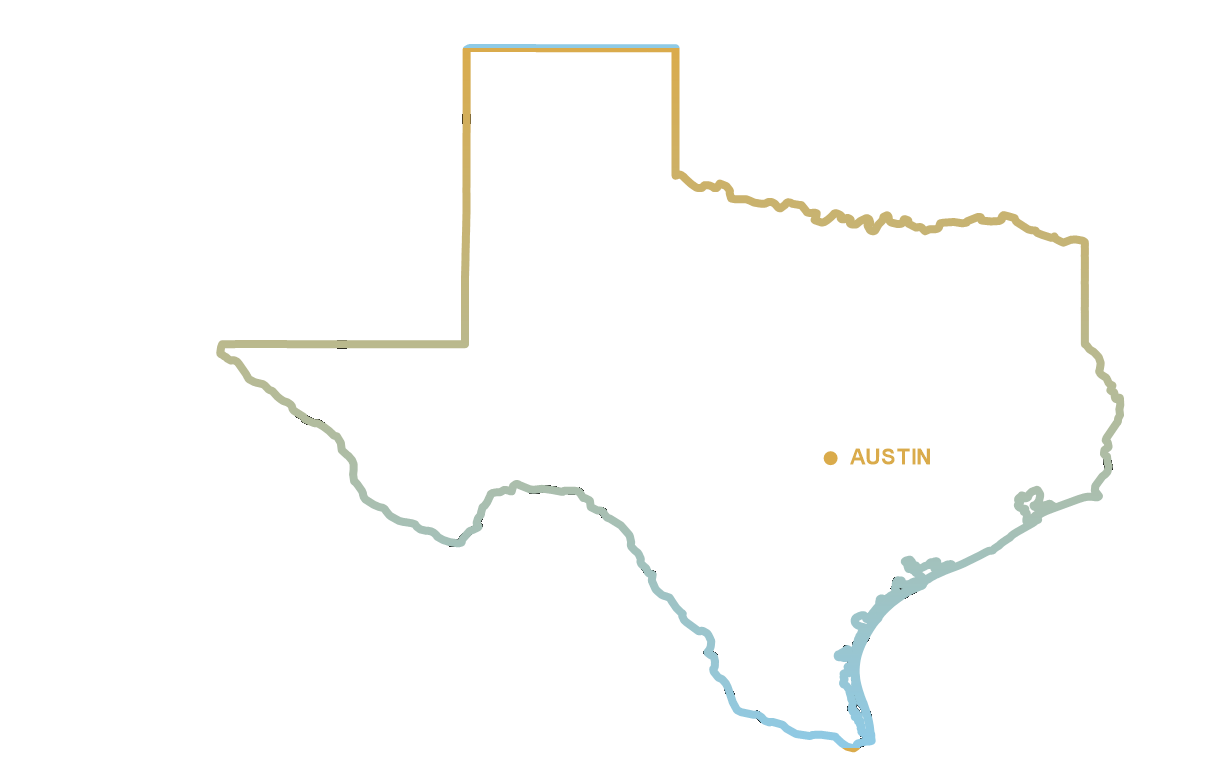
Outline of Texas, with Austin marked.

What you gain by partnering here

  • The Space Object Situation Room (SOSR)

    An operational-style command room in UT Austin’s Aerospace Engineering building (ASE) with 6 dual-operator workstations and multi-screen displays for modeling orbital regimes, testing human-machine interfaces, and running live capability demos.

  • Texas Advanced Computing Center (TACC)

    Multi-sensor orbital tracking and AI foundation models need heavy compute. Teams will have access to the Texas Advanced Computing Center (TACC) for large simulations and model training, plus storage and a secure environment, and a UT research partnership whose results are available to all teams.

  • The GaiaVerse Platform

    The lab’s integration platform. Every team builds on it. On GaiaVerse, teams work in isolated, IP-protected workspaces with curated space-domain data graphs and reasoning tools. They keep full ownership of their IP, can export their work at any time, and have no obligation to buy GaiaVerse services after the program.